Drainage in The Hill
Blocked Sewer The Hill
A blocked sewer is the whole household's waste with nowhere to go, and it rarely stays polite for long.
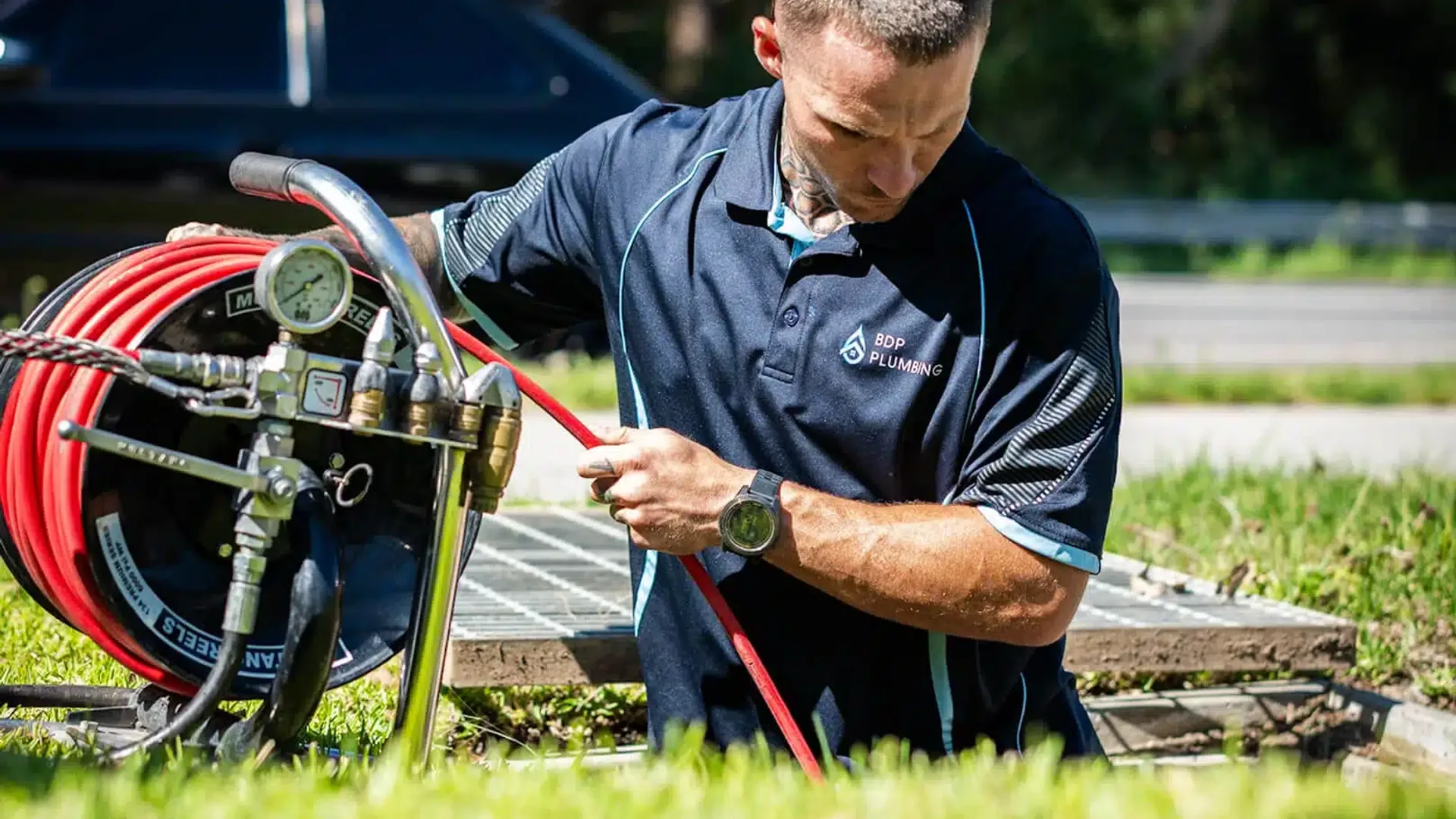
Plumbers The Hill clears sewer chokes across The Hill and the streets around it, with camera gear and jetting on the truck so the job gets done properly on the first visit.
The difference matters. A single slow basin is annoying; a sewer choke backs up every low point in the building at once, usually starting with the shower or the floor waste.
Signs it's the sewer, not just a drain
Watch for more than one symptom showing up together. Any of these usually means the main line is involved:
- Water backing up in the shower or lower floor waste when the washing machine empties
- Several fixtures slowing down at the same time
- A gully outside overflowing while nobody has been using much water indoors
- The toilet pan glugging whenever a bath or the laundry drains elsewhere
- A sewer smell hanging around the yard or the lowest bathroom
One fixture out of action points to a branch line. Everything together points downhill, to the main.
Why sewer lines choke up here
Sewer problems here have a pattern, and it comes straight off how the suburb was built. Four culprits turn up on most camera runs:
Shared mains serve whole terrace rows
Many of the older terrace rows around the cathedral precinct share a single sewer main, so one choke can knock several households offline at once on the same Saturday night.
Nineteenth-century earthenware under the terraces
The Victorian terraces still discharge through century-old earthenware laid down the slopes, and ground movement has been working on those joints for generations, leaving lips that catch and hold waste.
Roots follow the moisture
Fig trees and street plantings around the cathedral precinct send roots down moist pipe trenches, and cleared lines get re-invaded within a season or two without a proper root cut-back.
Flat transitions strand solids
Steep falls push waste downhill fast, but solids drop out where the run flattens near the bottom, and that stranded build-up is a signature sewer choke on these plunging lines.
How we clear it
We start with the line, not with a guess. The sequence is simple and it stops you paying twice:
- 1
Camera first
A push camera goes down the line from the closest access point, finds the choke and shows whether it's a soft blockage, roots or something structural.
- 2
Clear the choke
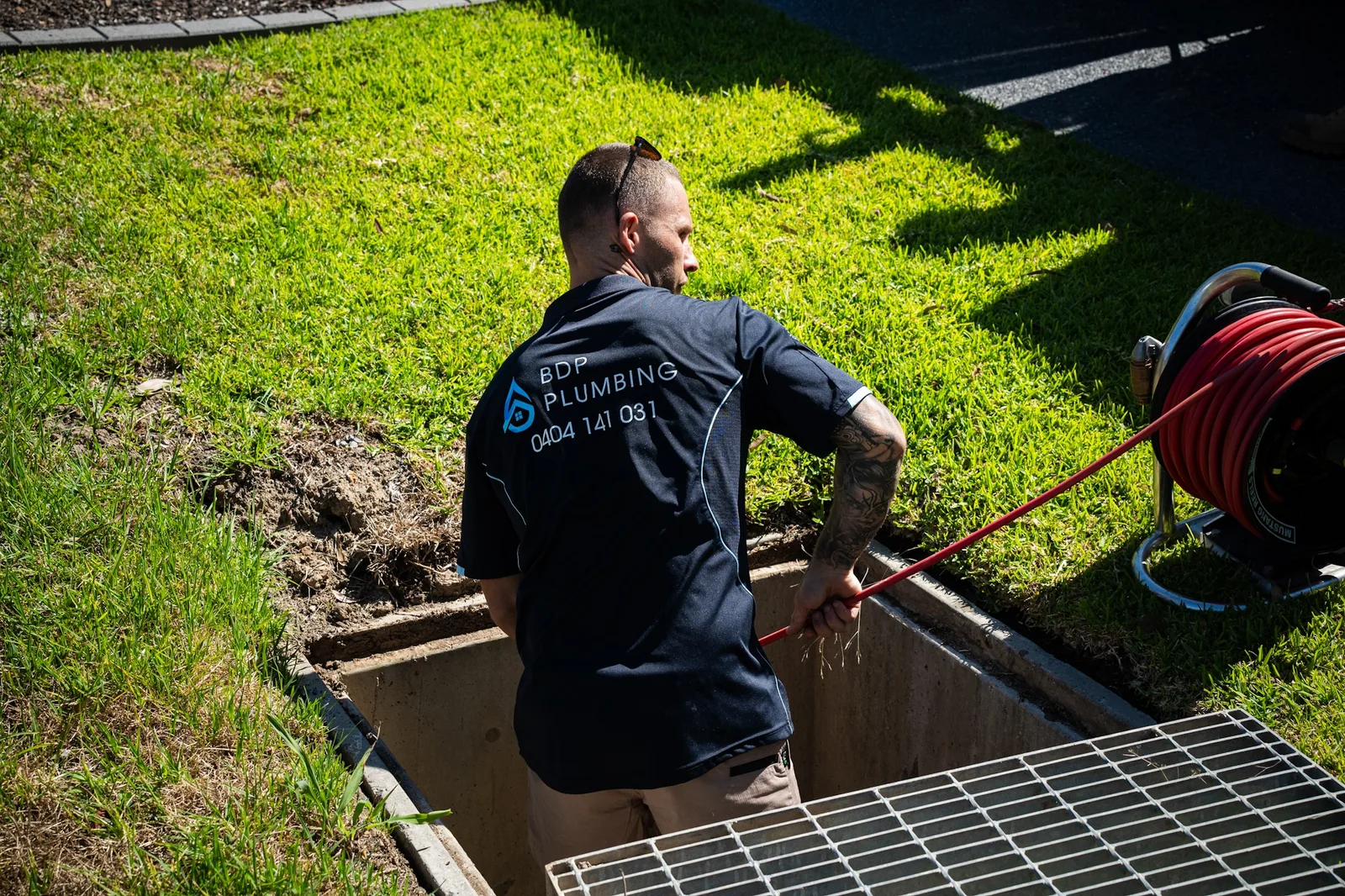
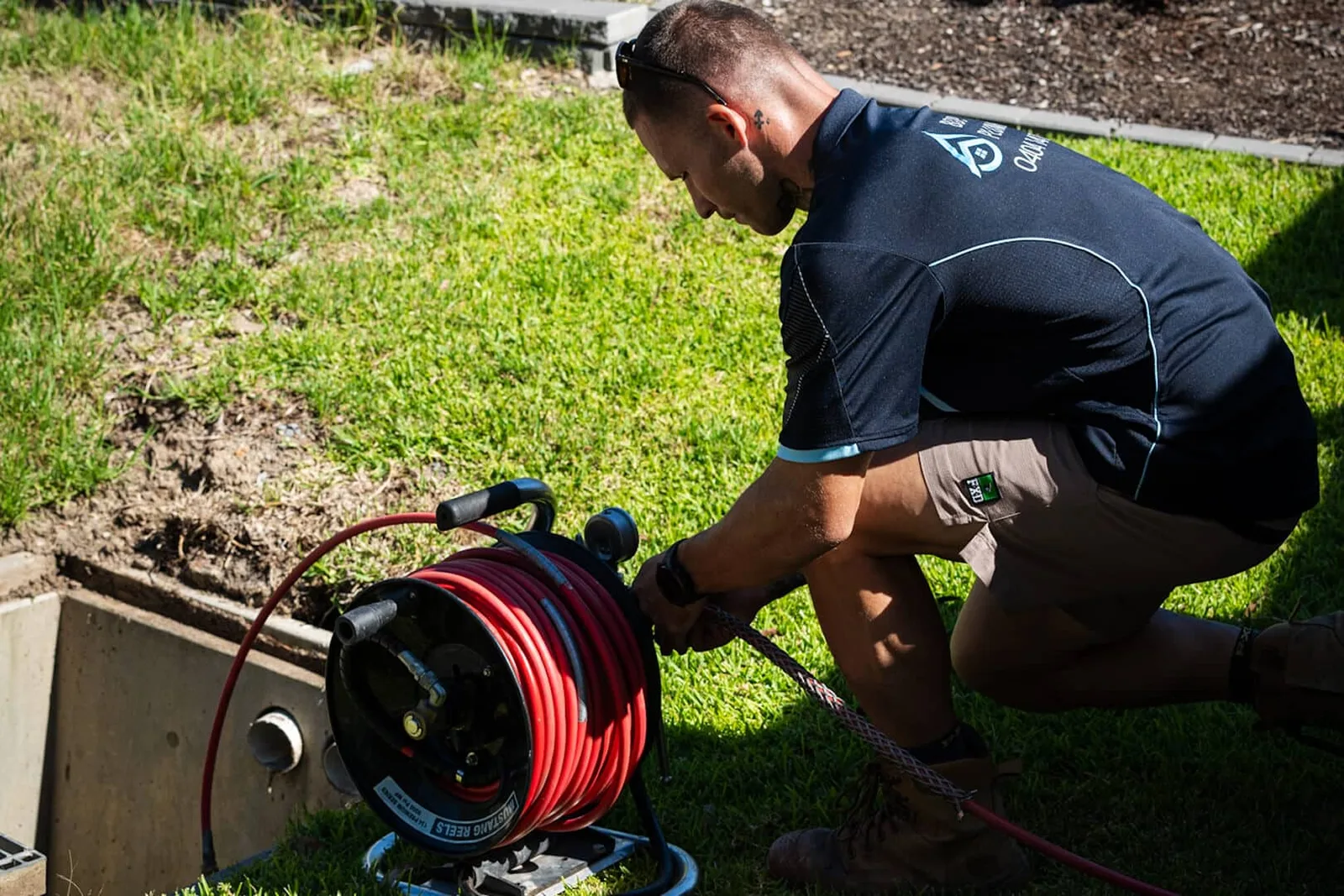
High-pressure jetting cuts through grease, roots and buildup, and scours the pipe wall clean rather than just poking a hole through the mess.
- 3
Prove it runs
The camera goes back through after clearing, so you see the line running clean and can see what caused it.
- 4
Fix the cause
If the footage shows a cracked or displaced section, that gets quoted separately and honestly, because clearing alone would only buy time.
When one choke takes out a whole building
Census figures put flats and apartments at 61.3 per cent of the suburb's dwellings, so plenty of the sewers we clear serve more than one household. In a converted terrace or a strata block, the main line doesn't care whose unit the choke sits under.
Isolation comes first.
Then the paperwork.
If the choke is backing sewage into living space, that's no ordinary job. It goes to our emergency plumbing team, any hour, and the mess gets contained before the clearing starts.
What a full service looks like
- 1
Call and tell us
Ring (02) 4063 3461 and tell us what's going on in The Hill. We'll ask a few quick questions so the right gear is on the truck the first time.
- 2
Quote before work
You get the price before anything starts. No call-out fee, no hourly surprises. You approve the quote or we shake hands and leave, no charge.
- 3
Clear it and show you
We jet the choke out, then run the camera back through so you can watch the line flowing clean and see exactly what caused the trouble.
- 4
Backed, no questions asked
If something isn't up to standard afterwards, we come back and make it right, no questions asked. That's the standard every The Hill job is held to.
Why locals keep our number handy
$0 Call Out
Quote First, Always
Licensed Local Plumbers
Made Right, No Questions Asked
A sewer that blocks twice in a year has an underlying cause, and we don't stop at the symptoms.
Sewer questions we get asked
How do I know it's the sewer and not just a drain?
Count the fixtures. One slow sink means a branch line. If the toilet glugs when the laundry drains, or the gully overflows while indoors sits idle, the main is the suspect.
Is a blocked sewer an emergency?
Yes, when sewage is coming back into a bathroom, laundry or living space. That's a health problem as much as a plumbing one, and we treat it as urgent.
Who pays when a shared sewer blocks in a strata building?
It depends where the choke sits. A blockage on the shared main usually falls to the body corporate, while a choke in one unit's own branch is that owner's cost.
Does clearing a sewer ever mean excavating?
Usually not. Jetting clears most chokes from existing access points. Excavation only enters the picture when the camera shows a collapsed section no pressure will fix, and you'd see that footage first.
Why does the same section keep blocking?
Because something in that section invites it. Roots re-invade cleared lines before the next storm season, and displaced earthenware joints catch waste every time. The last footage usually shows exactly where.
What if the camera shows the pipe is collapsed?
Then clearing won't hold, and we say so plainly. A collapsed section gets its own quote for repair or replacement, backed by the footage, with a temporary clear offered to get you through.
Plumbers in The Hill and the suburbs around it
Call a sewer plumber now
Ring (02) 4063 3461 and tell us what's happening. $0 call out, a clear quote before any work starts, and a job we come back and make right if it isn't right the first time.
Related pages worth a look: blocked drains for fixture and branch line chokes, or general plumbing if the fault turns out to be something else entirely.